Experimental Facilities

What we can measure and investigate

Our facilities connect optical microscopy, spectroscopy and optoelectronic characterisation with controlled sample preparation and complementary techniques across the Institute of Physics.

The KahmannLab works with the Optics and Photonics of Condensed Matter and Semiconductor Physics groups. Together, this provides access to wet-chemistry preparation, a nitrogen glovebox with spin coating, thermal evaporation and complementary characterisation including X-ray diffraction, electron microscopy, circular-dichroism spectroscopy and Raman spectro-microscopy.

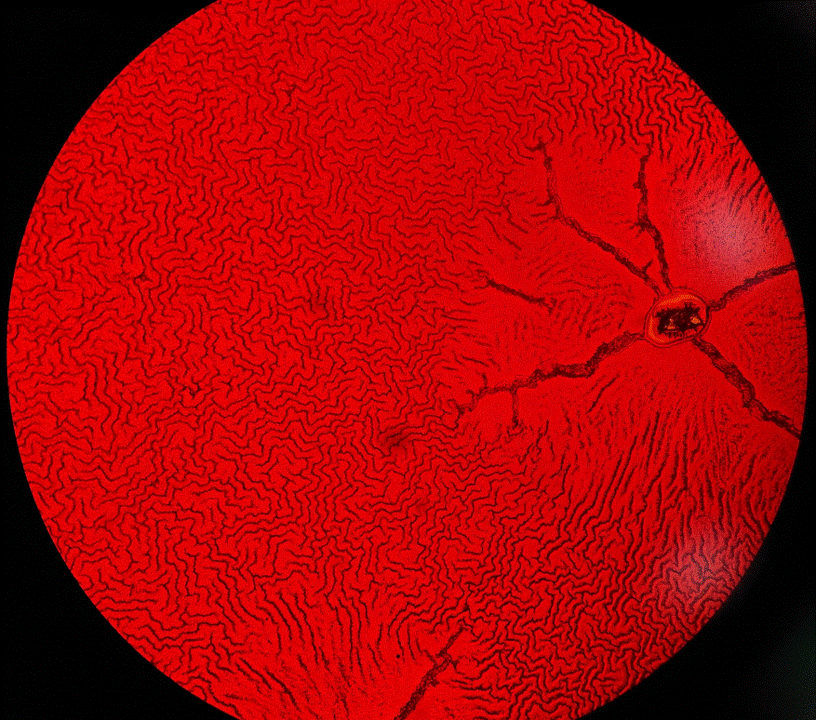
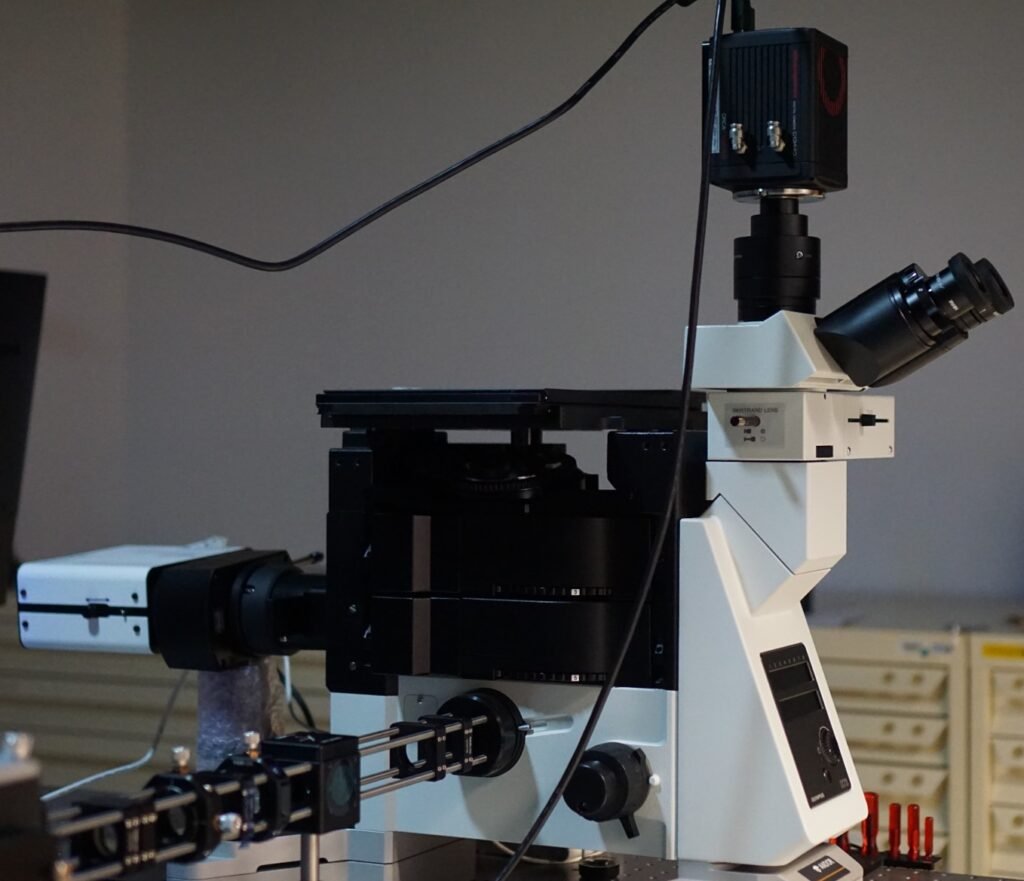
Evident IX73 inverted optical microscope in the KahmannLab

Optical microscopy & spatially resolved spectroscopy

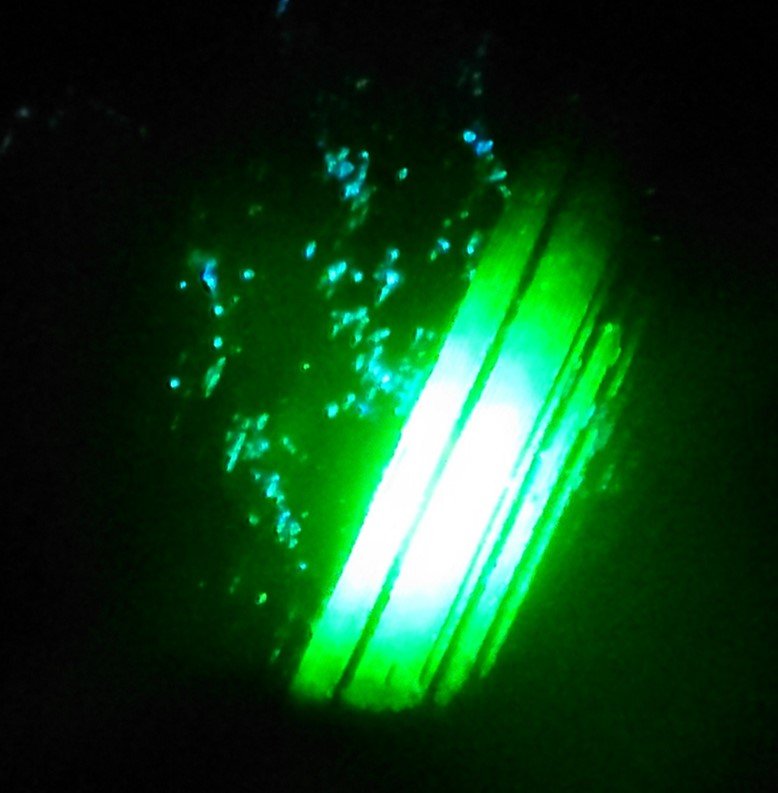
We image samples in real space and momentum space, and resolve how emission spectra vary across a sample. Focused and wide-field excitation allow local photoluminescence measurements under LED or laser illumination.

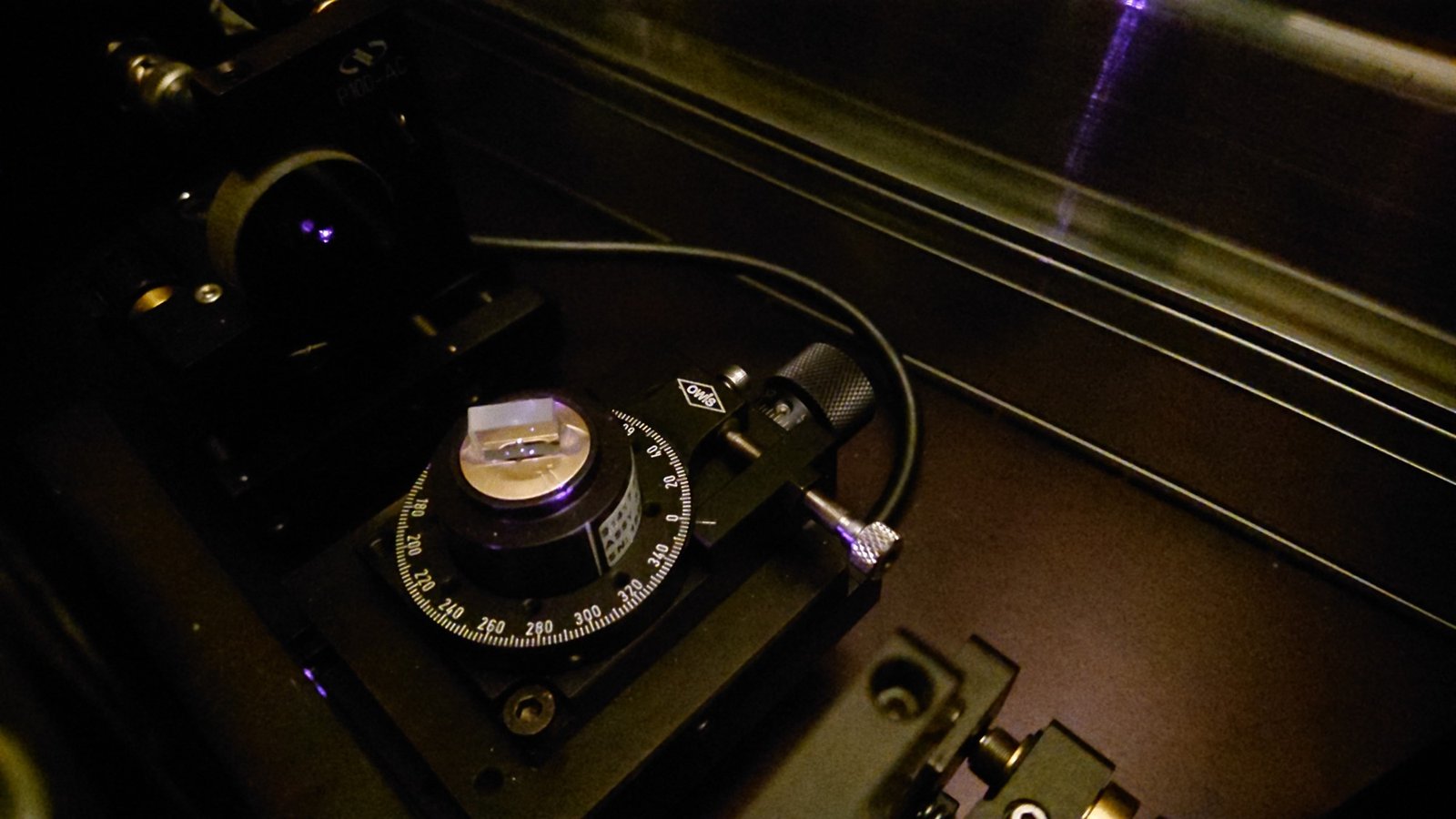
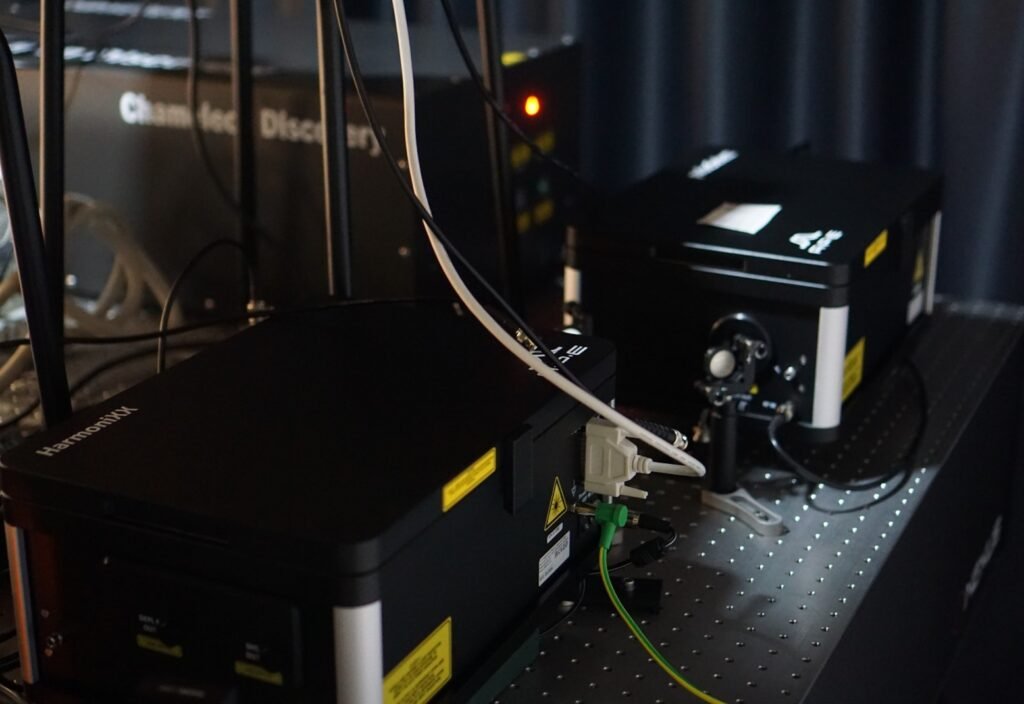
Coherent Chameleon Discovery femtosecond laser system

Time-resolved & ultrafast spectroscopy

Broadly tuneable femtosecond excitation and time-gated detection let us investigate fast photophysical processes, including how excitations move and recombine. The optical train can support both microscopy and macroscopic measurements.

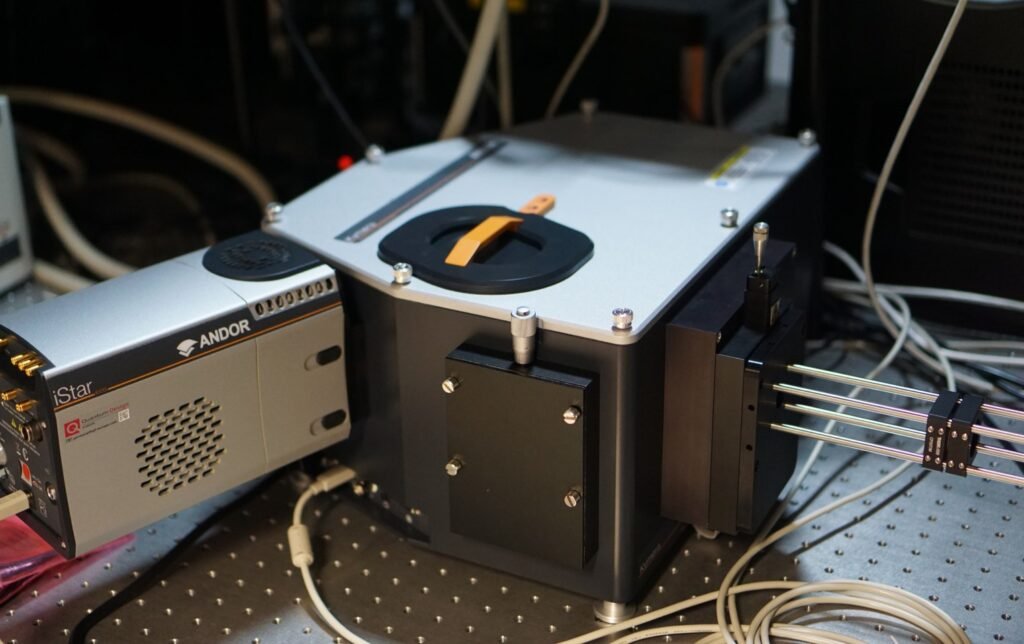
Kymera imaging spectrograph and iStar camera

Steady-state & spatially resolved optical spectroscopy

An imaging spectrograph coupled directly to the microscope supports spectral or spatial readout in the visible range. A separate beam path enables macroscopic photoluminescence measurements when microscopy is not required.

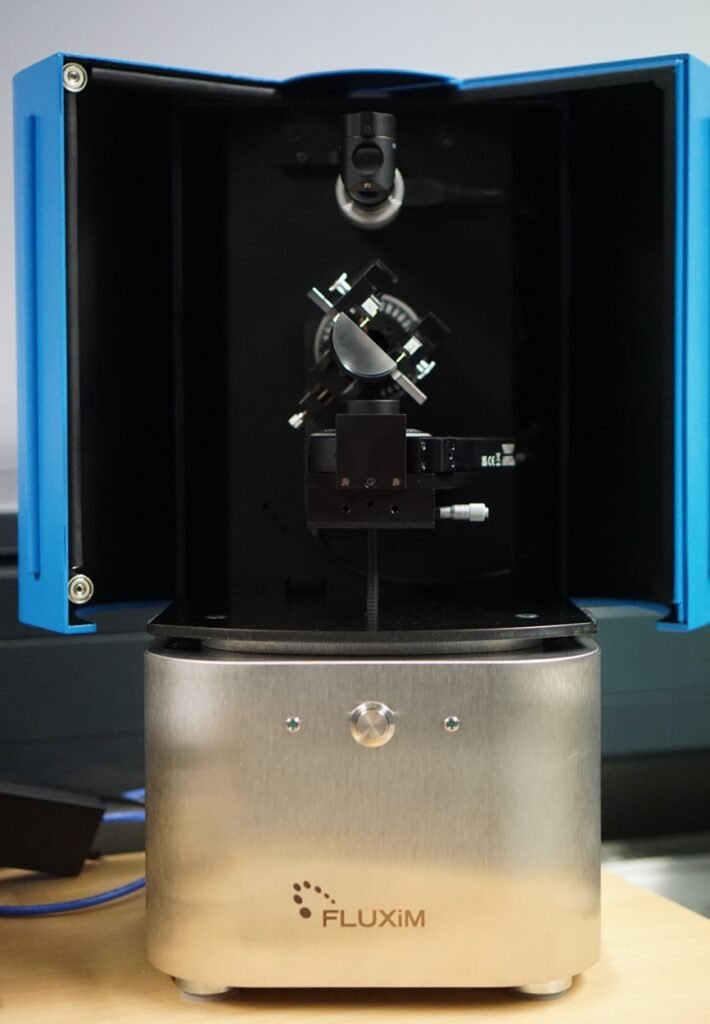
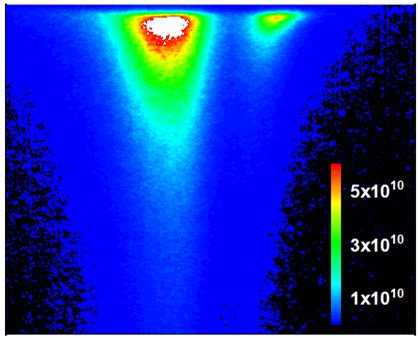
Fluxim Phelos angular photoluminescence and electroluminescence system

Optoelectronic emission characterisation

Angle-dependent photoluminescence from thin films and electroluminescence from operating light-emitting devices can be measured with a dedicated goniometer-based platform.

Detailed instrumentation

Coherent Chameleon Discovery

Broadly tuneable from 660–1320 nm, delivering pulses of approximately 100 fs at 80 MHz and up to 4 W. An APE pulseSelect reduces the repetition rate to 310 Hz; a HarmoniXX second-harmonic generator extends excitation down to 330 nm.

Evident IX73

Manual inverted microscope configured for focused and wide-field illumination. It couples directly to the spectrograph and supports steady-state imaging in real space and k-space.

Kymera 328i + iStar

Imaging spectrograph with three gratings and one mirror, paired with a time-resolved intensified CCD camera with 2 ns resolution in the visible range. An alternative path supports macroscopic measurements.

Fluxim Phelos

Goniometer-based platform for angle-dependent luminescence from photoexcited thin films and electrically driven light-emitting devices.
Scroll to Top